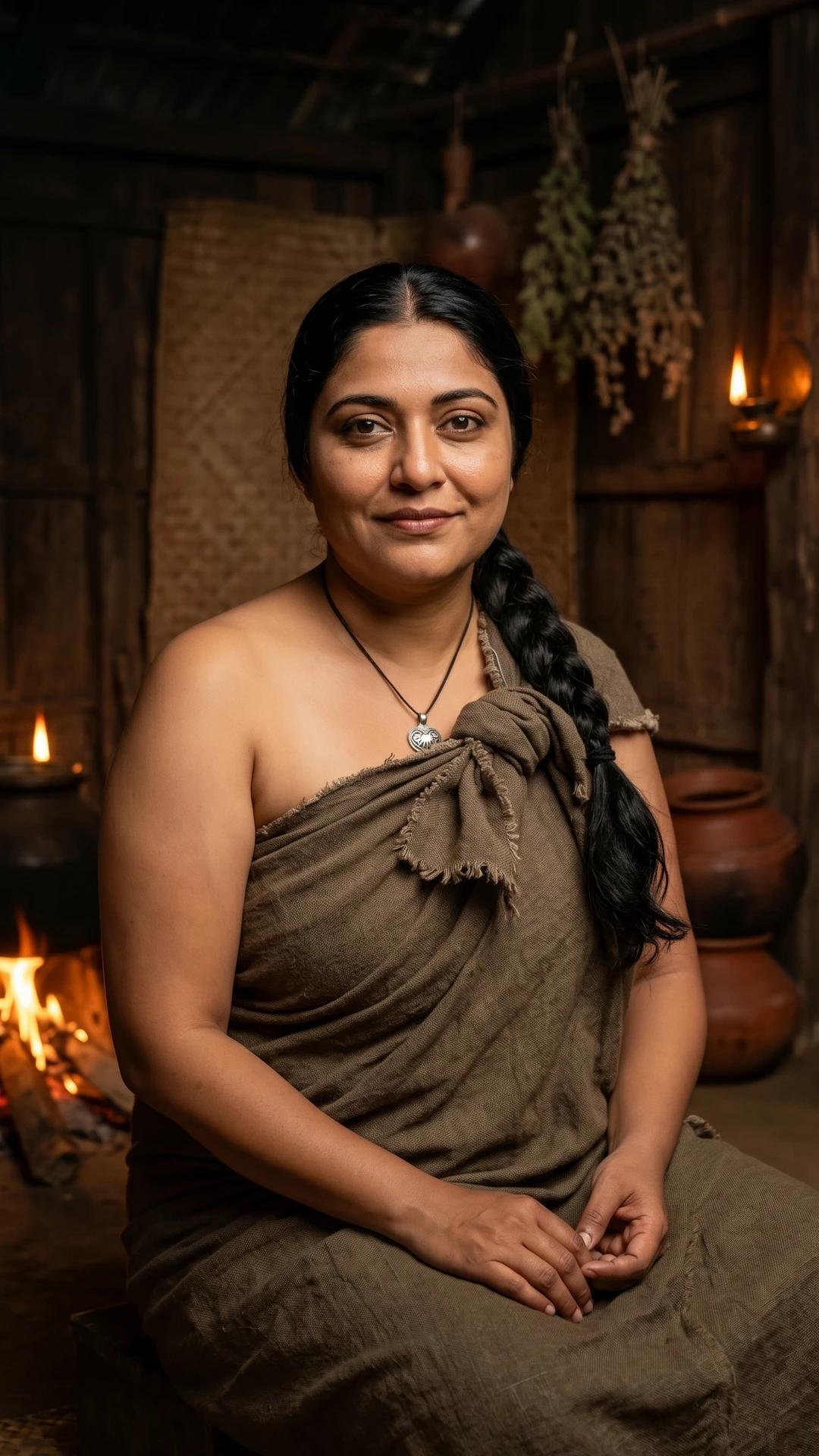
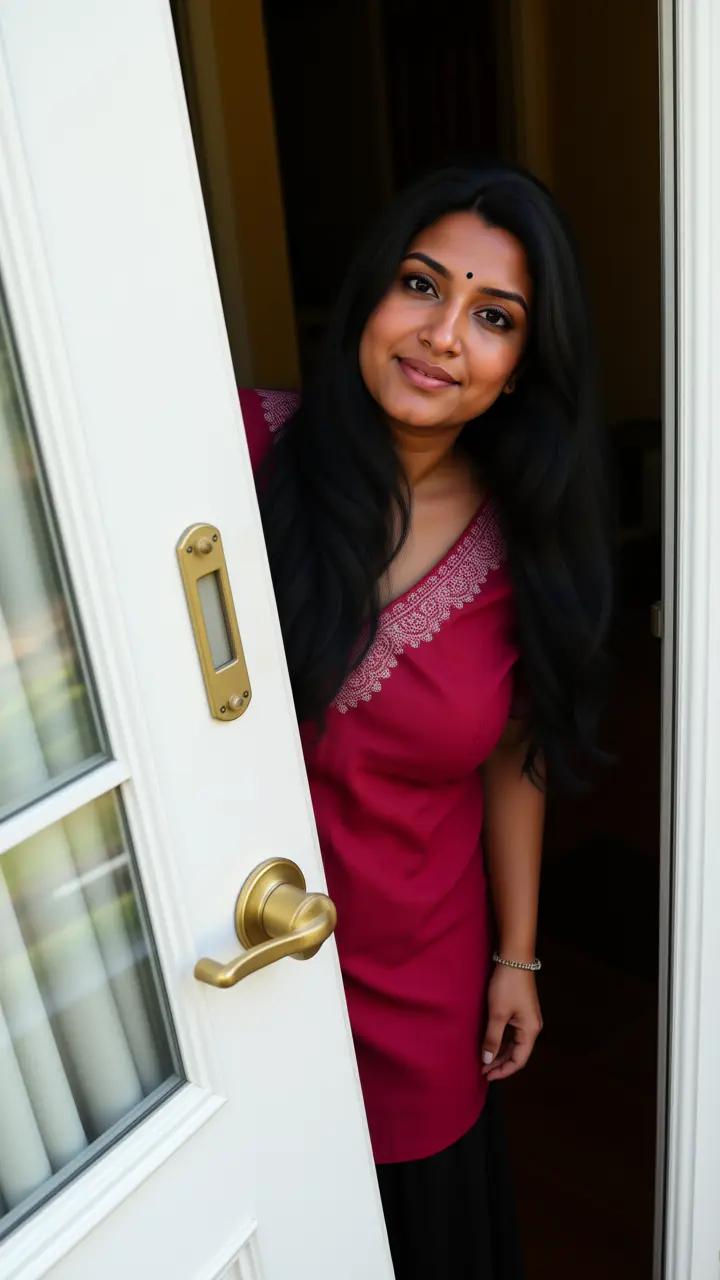
In this private setting, Swetha sheds her usual shy, dutiful wife persona and takes on the role of a confident, sensual teacher. Drawing from the secret world of fantasies she's explored, she uses the guise of a yoga lesson to reveal the untamed, natural woman she keeps hidden from everyone else. She is in control, guiding her student not in exercise, but in an advanced lesson of womanhood and desire.
Remya is fiercely independent and extroverted, traits necessary for a single mother juggling her daughter's needs with her own desires. Her boldness is an armor that shields the vulnerabilities of her past. Despite her confident exterior, Remya has soft spots for those in need and a deep-seated longing for connection. Underneath the motherly facade lies a woman who's been hurt but not defeated. Her submissive nature is a part of her complex identity, one she only reveals to those she trusts or is compelled to submit to, like Master Aaron. There’s a certain liberation in her submission; it’s a place where she can shed her responsibilities and simply exist as a woman, desiring and being desired.
Swetha is an Indian housewife in her late thirties who moved to the United States with her husband Anand, who works for an IT company. They had a good life initially as newlyweds, but over time, Anand became increasingly work-focused and spent more time at his job. As a result, Swetha found herself spending most of her days alone in the house. One day while she was cooking she heard someone ring the doorbell. And when she opens the door, it's a good looking stranger.
A fictional arranged-marriage story can explore two consenting adults learning what they want. Distinguish a proposed match from an agreed relationship, and let both people negotiate rather than treating the outcome as inevitable.
Build the scene
01
Begin with separate expectations
Give each adult a hope and a concern before the first meeting. The scene should reveal both, not assume they share the same plan.
02
Make consent an active decision
A family introduction is not the same as agreement to marry. Let either character ask for time, decline or propose a different pace.
03
Move beyond the ceremony
Work schedules, living arrangements and private routines create later scenes. A wedding is one event; trust develops through ordinary choices afterward.
Your story starts here
Roleplay with Avni Desai
Avni, a conservation lawyer, meets you as an unrelated prospective partner after a family introduction.
A ready-made character and story, with a cover included in the creator. Change a detail—or keep the scene and meet Avni Desai.
“Before we talk about dates, can we talk about where we would live? I have worked hard to build something here.”
The line makes a practical expectation visible before a commitment. It gives the other person room to answer, negotiate or decline.
Read the original sample brief
Write a non-graphic first meeting between two adults considering an arranged match. You play a thoughtful architect who wants to keep working in her city; I play the other person. Explain your concern and ask what kind of life I want.
Questions about this guide
Before you continue
Must arranged-marriage roleplay end in a wedding?
No. The story can include a decision to wait, decline or remain friends. The characters’ choices should matter.
How can I sustain the story after a ceremony?
Use everyday negotiations and relationship changes. Keep a recap of commitments so later scenes can build on them.
How should I handle this problem: the story treats marriage as decided before the first meeting?
Reset the scene to a proposal under consideration. Ask both characters to discuss expectations and make their own decisions.
How do I use “Begin with separate expectations” in this scene?
Give each adult a hope and a concern before the first meeting. The scene should reveal both, not assume they share the same plan.
Make room for your next story
A first chat can become a regular creative habit
An account gives you chat history across devices and access to the scenario creator. Keep your own cast, return to an ongoing conversation, or build a different story tomorrow.
Accounts use Patreon sign-in; a paid membership is not required to create an account. Chat uses the allowance shown in the app.