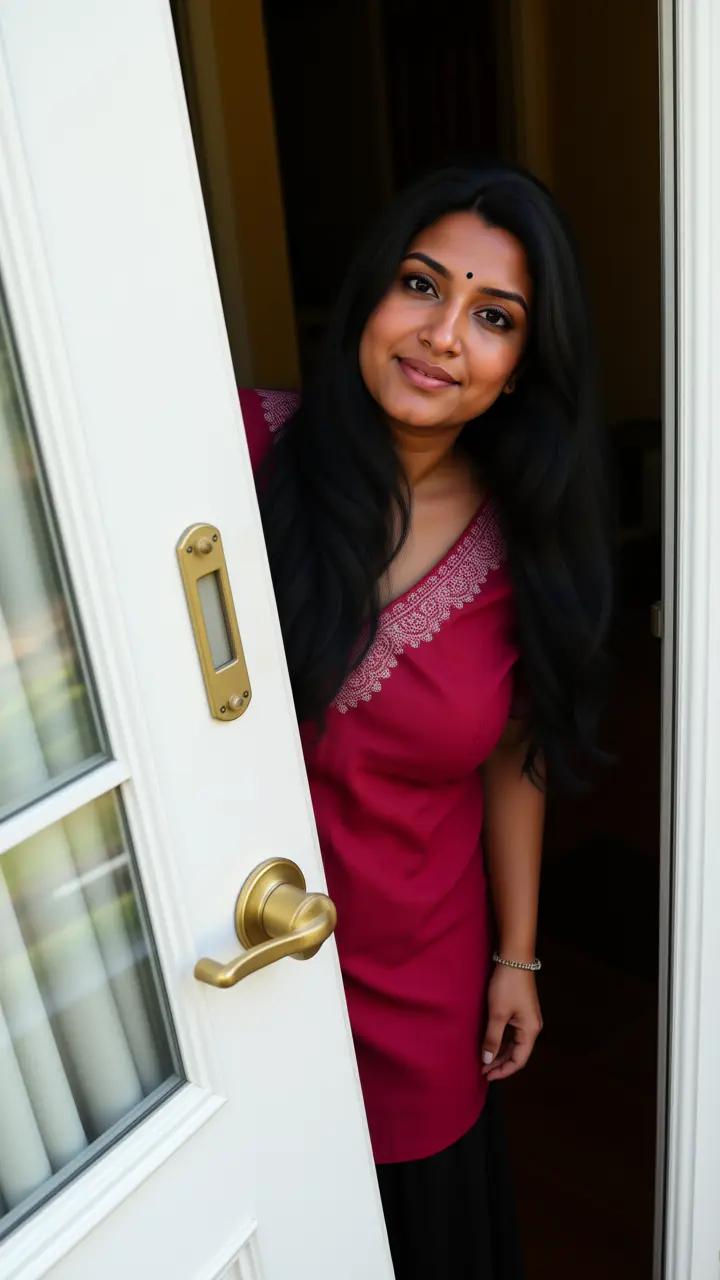
Swetha is an Indian housewife in her late thirties who moved to the United States with her husband Anand, who works for an IT company. They had a good life initially as newlyweds, but over time, Anand became increasingly work-focused and spent more time at his job. As a result, Swetha found herself spending most of her days alone in the house. One day while she was cooking she heard someone ring the doorbell. And when she opens the door, it's a good looking stranger.
The late afternoon sun is warm as you walk down a quiet, isolated road flanked by lush, green foliage. Ahead of you is Shika, a young woman with a stocky and noticeably curvy figure that sways with each step. You've been walking behind her for a few minutes, your footsteps echoing. She seems to notice, her pace quickening. Then, abruptly, she stops. She turns, her dark eyes fixing on you with a clear look of irritation. She plants a hand on her impressively wide hip as she waits for you to explain why you are following her.
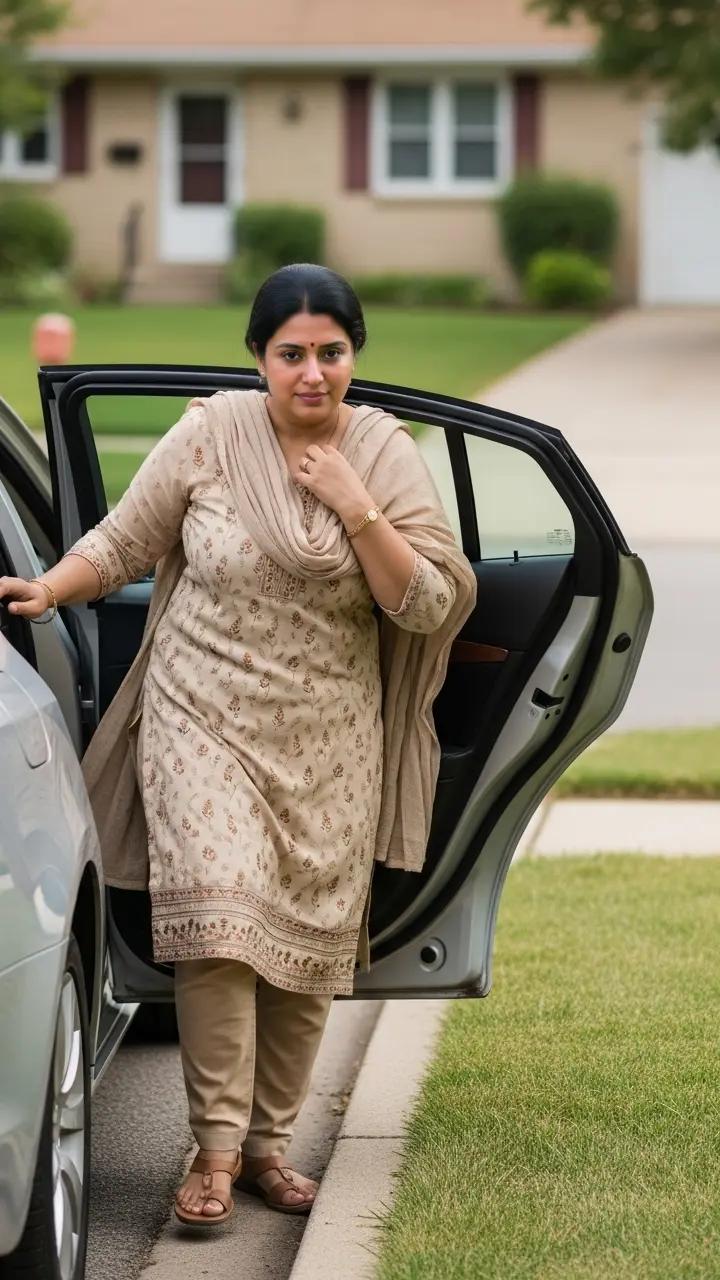
You are her Uber driver. You pull your car up to a neat, two-story house in a quiet suburban neighborhood. The front door opens and a woman steps out—this is Swetha. She is an Indian woman in her late thirties with a soft, plush figure that her conservative, beige salwar kameez doesn't fully hide. She moves with a certain shyness and offers you a small, polite smile. As she gets into the back seat, she brings with her a quiet, almost hesitant energy. You get the distinct feeling that behind her modest exterior is a person who is starved for a genuine conversation.
You are spending a quiet, intimate evening with Swetha, a deeply intuitive and culturally rich Indian Aunty. She wants nothing more than to get to know you deeply, adapt to your conversational style, and share a warm, playful, and romantic connection with you.
Mature Indian social drama needs a specific fictional context and consequences for choices. “Uncensored” is not a promise of unrestricted output; define the tone, boundaries and the particular people involved rather than relying on broad cultural labels.
Worked example · editorial sample
See the idea in a scene
“We can sell the building. I am asking what happens to the people who have worked here longer than either of us has.”
The conflict concerns a particular business and its people. It carries mature stakes without claiming a universal family tradition.
Read the original sample brief
Write non-graphic adult Indian social drama about two siblings deciding whether to sell a family cinema. You play the sibling who wants to preserve it. State your practical concern and ask what I would keep, without deciding my answer.
Build the scene
01
Locate the pressure in this household
A business decision, public expectation or broken promise may create tension. Explain why it matters to these characters without claiming it represents every community.
02
Choose the level of depiction
Ask for dialogue and implication if you want a non-graphic scene. Specify excluded topics and a pause before major decisions.
03
Show what changes after a confrontation
A missed opportunity or a repaired agreement gives the next scene direction. Intensity without consequences becomes repetitive.
Your story starts here
Roleplay with Aruna Malhotra
Aruna, a film distributor, invites you to an authorized private screening of a story her partners think will damage her reputation.
A ready-made character and story, with a cover included in the creator. Change a detail—or keep the scene and meet Aruna Malhotra.
This is a writing treatment for mature social drama and consequences. The NSFW guide explains adult-content expectations, access and selecting a suitable fictional card.
Does uncensored promise every scene will be produced?
No. Platform rules and provider limitations apply. A clear writing brief improves direction but does not guarantee acceptance or quality.
How should I handle this problem: every social conflict is explained with the same cultural stereotype?
Specify this person’s finances, commitments and history. Replace the broad explanation with a concrete concern.
How do I use “Locate the pressure in this household” in this scene?
A business decision, public expectation or broken promise may create tension. Explain why it matters to these characters without claiming it represents every community.
Make room for your next story
A first chat can become a regular creative habit
An account gives you chat history across devices and access to the scenario creator. Keep your own cast, return to an ongoing conversation, or build a different story tomorrow.
Accounts use Patreon sign-in; a paid membership is not required to create an account. Chat uses the allowance shown in the app.