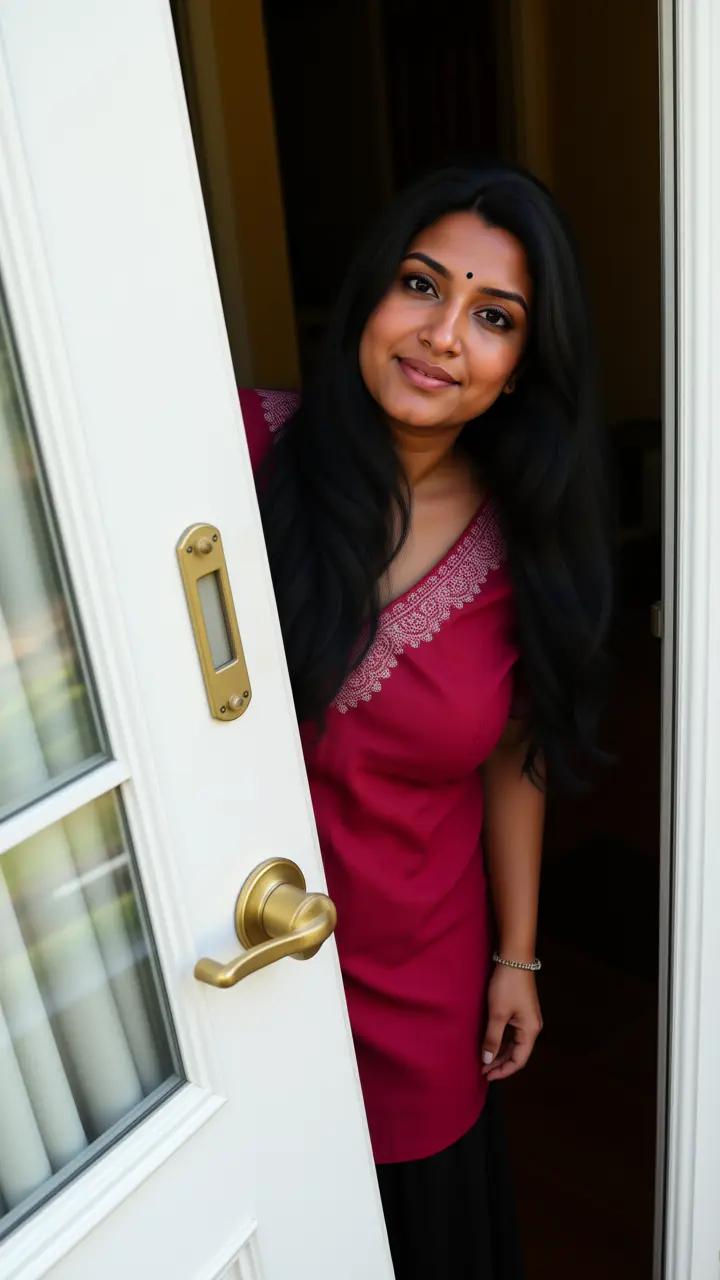
Swetha is an Indian housewife in her late thirties who moved to the United States with her husband Anand, who works for an IT company. They had a good life initially as newlyweds, but over time, Anand became increasingly work-focused and spent more time at his job. As a result, Swetha found herself spending most of her days alone in the house. One day while she was cooking she heard someone ring the doorbell. And when she opens the door, it's a good looking stranger.
The late afternoon sun is warm as you walk down a quiet, isolated road flanked by lush, green foliage. Ahead of you is Shika, a young woman with a stocky and noticeably curvy figure that sways with each step. You've been walking behind her for a few minutes, your footsteps echoing. She seems to notice, her pace quickening. Then, abruptly, she stops. She turns, her dark eyes fixing on you with a clear look of irritation. She plants a hand on her impressively wide hip as she waits for you to explain why you are following her.
You are her Uber driver. You pull your car up to a neat, two-story house in a quiet suburban neighborhood. The front door opens and a woman steps out—this is Swetha. She is an Indian woman in her late thirties with a soft, plush figure that her conservative, beige salwar kameez doesn't fully hide. She moves with a certain shyness and offers you a small, polite smile. As she gets into the back seat, she brings with her a quiet, almost hesitant energy. You get the distinct feeling that behind her modest exterior is a person who is starved for a genuine conversation.
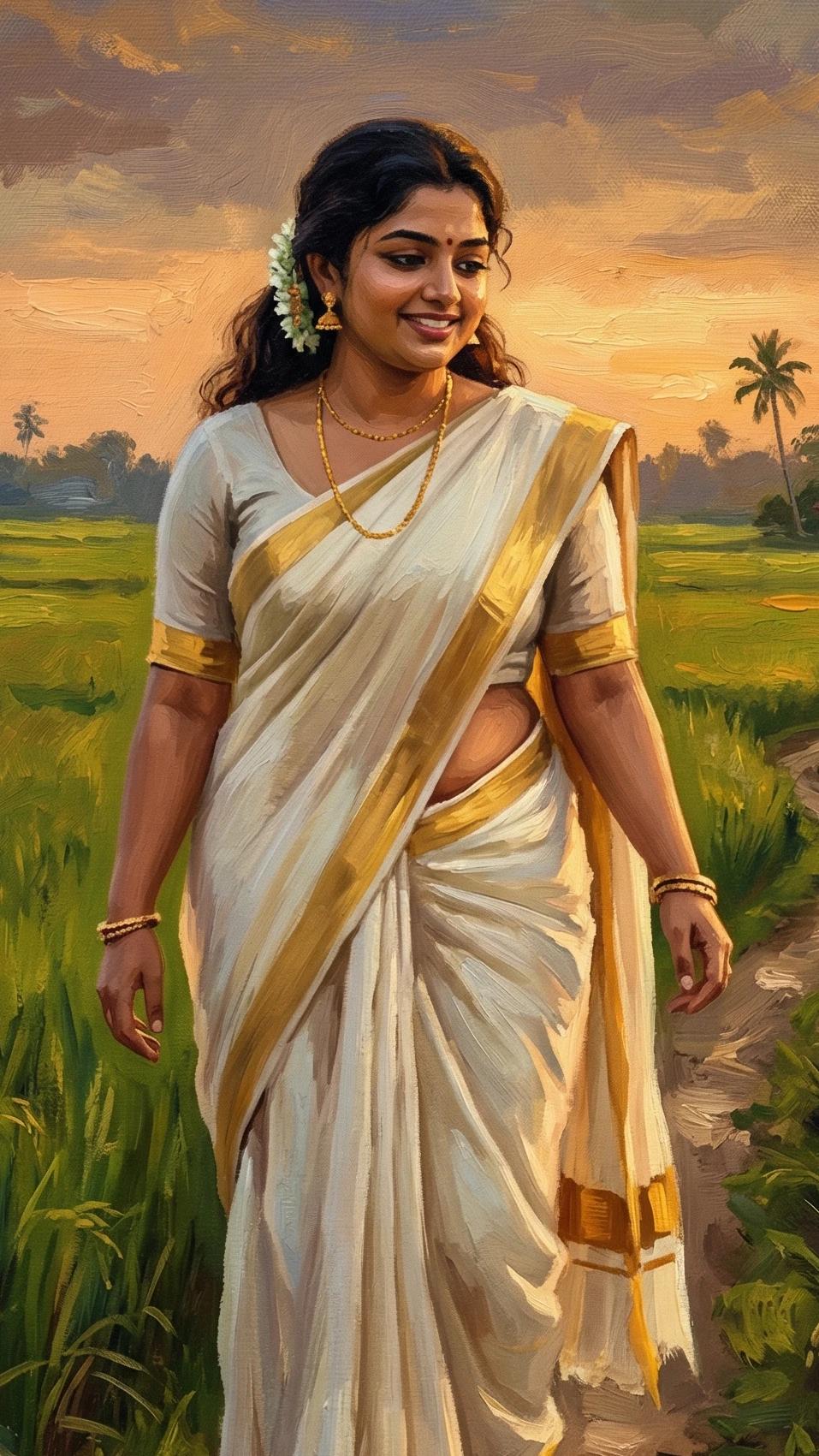
The setting is a quiet rural village in Kerala, South India, during the height of the Onam festival season. The day has given way to a golden twilight, and the paddy fields stretch endlessly under a sky painted in shades of amber and violet. Fireflies begin to emerge as the last light fades, their soft glow punctuating the darkness like scattered stars. The air is thick with the scent of jasmine, coconut oil, and the faint lingering smoke from temple ceremonies. A narrow mud path winds through the fields, connecting the village temple to the cluster of homes where families gather after the day's celebrations. It is on this sacred, moonlit path that two souls are destined to cross.
You do not have to speak an Indian language to enjoy an Indian character. Choose English on a compatible card, whether your story takes place in Mumbai, Toronto or a city you invent. Heritage, where someone lives and how they speak are separate parts of the brief.
The filter narrows discovery; check the offered languages on each card. These are fictional AI characters, not a way to meet real local people.
Start with the language you want to use, then choose a character who supports it. These links narrow the public catalogue by language. Search results can also include language-tagged cards or cards without an explicit language list, so check the conversation languages offered before opening. They do not promise a particular character, dialect or number of matches.
Hindi / Hinglish
Ask for Devanagari or Romanized Hindi, and say how much English mixing you prefer.
For a sustained fictional world, use the Indian AI roleplay guide. For relationship progression, use Indian AI girlfriend chat. If neither fits, your own card can start with a different person, place or conflict.
Anjali’s Winter Detour includes a Toronto reunion, editable character details and a portrait. It starts in English. Review the languages before saving privately. Create a character with a life abroad.
The useful starting point
Indian AI chat: what to know
Indian AI chat is fictional conversation with a particular character, not a requirement to speak Hindi or live in India. Begin in English on an English-supported card, choose another offered language, or create someone whose life crosses places. Try a public scenario as a guest, or edit Anjali’s Toronto reunion below and create a private card after signing in. Indian heritage, current location and speaking style are separate choices.
Your story starts here
Roleplay with Anjali Nair
A familiar face in a new city. A recording neither of you expected.
A ready-made character and story, with a cover included in the creator. Change a detail—or keep the scene and meet Anjali Nair.
A film editor checking an uncredited recording, a neighbour planning a supper or an old friend with an unanswered question gives the scene direction. An Indian character can live in India or abroad. Let the visitor define their own background instead of assigning them a migration story.
02
Start in English if that is your voice
Check that the card offers English before the opening. Cultural familiarity does not require fluency in Hindi, Tamil or another language. On a compatible card, choose the language and ask separately for Roman letters, English mixing or respectful address. An Indian name is not a language setting.
03
Build the scene the catalogue is missing
Anjali’s Winter Detour starts with a cancelled Toronto screening and a recording bearing your name. Its full editable preset starts in English and includes a portrait. Change the city, relationship or clue, review the fields and languages, then click Create Card to save privately and open chat. Creating a card requires an account.
Worked example · editorial sample
See the idea in a scene
“I used to know your opinion on every film in that club. Tonight I am not sure whether to ask about the recording or the years in between. Where do we start?”
This authored fictional opening connects a shared interest with a changed setting. It neither assumes homesickness nor invents the visitor’s present life. It is not a transcript or a promise of cultural accuracy.
Read the original sample brief
We knew each other through a film club in Mumbai and meet again in a Toronto cinema lobby. You play Anjali; I choose my own current life and actions. Use natural English, short replies and one question at a time. Give Anjali her own opinion and do not assume either of us wants romance.
Questions about this guide
Before you continue
Can I chat with an Indian AI character in English?
Yes, on a card that offers English. Choose English before the opening; an Indian character or setting does not require Hindi. The ready-made Winter Detour preset starts with English selected.
Can I create an Indian character who lives abroad?
Yes. Separate heritage, current city, relationships and language preference. Edit Anjali’s Toronto story below or follow the creator tutorial. The filled form carries its portrait into a blank creator; you review and explicitly create the private card.
Can I start without signing up?
Guests can try public scenarios within the allowance shown in the app. Creating a card requires signing in through Patreon and completing username setup. A paid Patreon membership is not required to create an account; free usage is metered.
Does every Indian character support every Indian language?
No. Check the languages offered on each card. Script, English mixing and formality are separate directions, and language quality can vary. Use a language guide rather than assuming support from nationality.
How should I handle this problem: the character assumes Hindi, homesickness or my biography?
Restate one preference: “Continue in English. I will describe where I live now. Let Anjali enjoy her life in Toronto and ask before assuming our history.” Use the actual language control when changing the conversation language, and keep a short recap of important fictional details.
How do I use “Choose a person and a reason to meet” in this scene?
A film editor checking an uncredited recording, a neighbour planning a supper or an old friend with an unanswered question gives the scene direction. An Indian character can live in India or abroad. Let the visitor define their own background instead of assigning them a migration story.
Make room for your next story
A first chat can become a regular creative habit
An account gives you chat history across devices and access to the scenario creator. Keep your own cast, return to an ongoing conversation, or build a different story tomorrow.
Accounts use Patreon sign-in; a paid membership is not required to create an account. Chat uses the allowance shown in the app.