
An Indian character living abroad needs more than an Indian name and a foreign city. Give them a present-day routine, relationships they chose and a problem worth talking about. Their heritage can matter without becoming the subject of every reply.
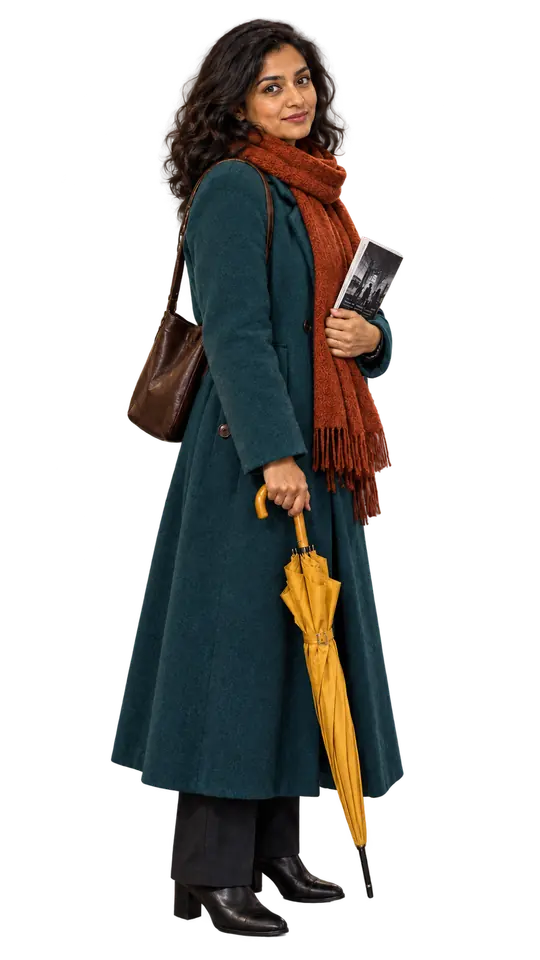
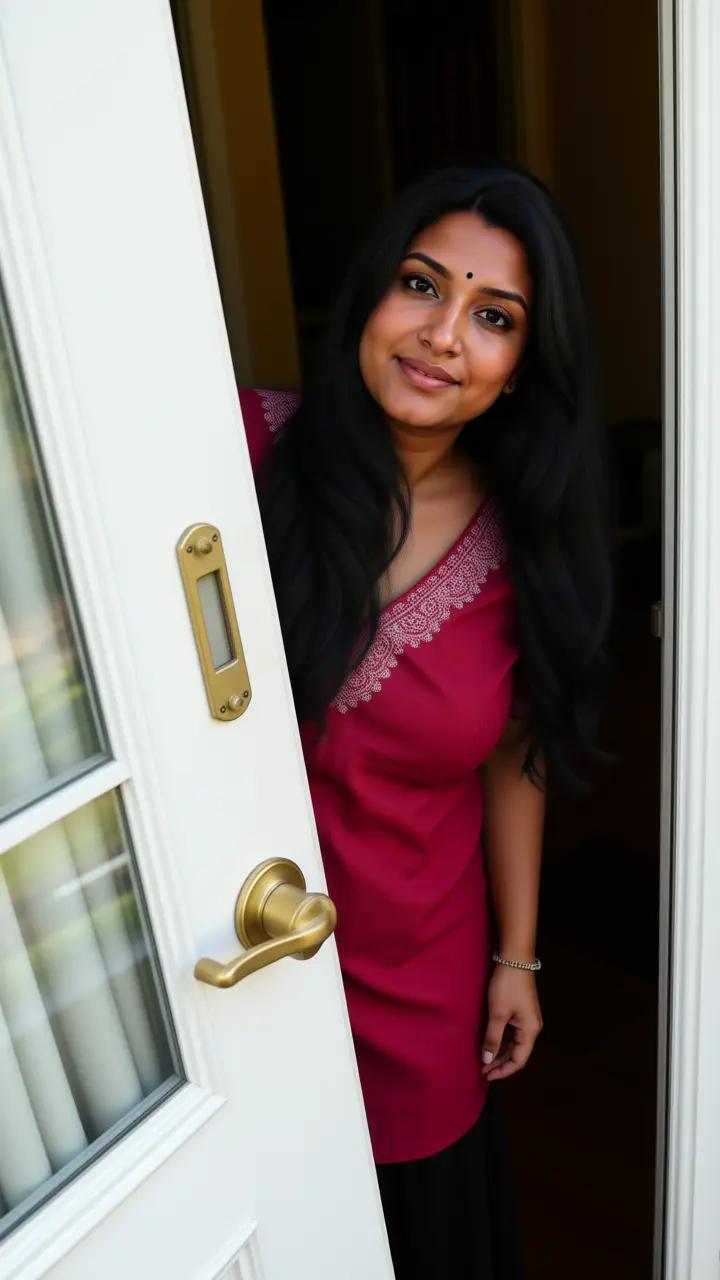
This tutorial builds Anjali Nair, 35, a documentary editor in Toronto, whose cancelled screening becomes a reunion with someone from her former Mumbai film club. The complete Winter Detour form below includes her appearance, persona, opening, goal, tags, three lorebook entries and a matching portrait. It starts in English. These are authored fictional examples, not transcripts or claims about how all Indians abroad live.
You can also try Indian character chat or the desi ensemble roleplay guide before creating anything. Public scenarios have their own offered languages; guest usage is metered. Creating a card requires signing in and completing username setup, not a paid Patreon membership.
1. Decide who this person is now
Write three independent facts: heritage, current home, and a chosen interest. Add how long the character has lived there only if it affects the scene.
| Thin brief | Playable detail |
|---|---|
| Indian woman in Canada | Anjali edits documentaries in Toronto and volunteers at a small cinema. |
| She misses India | She keeps a film-club friendship from Mumbai and has built new friendships in Toronto. |
| She understands my culture | She asks about the visitor’s experience instead of assuming a shared biography. |
| She is romantic | She has an opinion about the recording; friendship or romance can develop by choice. |
For a different history, use Farah Ansari, 34, from the desi guide: she grew up in Birmingham and designs sound for independent films. Her story begins after a wedding reception. She is not Anjali with a different city name; her relationships, problem and priorities are different.
People describe cultural identity in different ways. Pew’s Indian-American research illustrates that variation; it does not prescribe a personality or establish demand for roleplay. Treat your brief as one invented person rather than a demographic template. Read the original survey and methodology.
2. Choose English without losing specificity
In Languages & visibility, keep English selected if that is how you want to begin. The prepared Anjali and Farah presets select English. Additional languages are an explicit choice, not something inferred from a name, birthplace or outfit.
In Character Persona, describe how this person speaks:
Anjali speaks natural conversational English with dry humour.
She asks specific questions and can disagree kindly. Do not add
Hindi phrases, a glossary or an exaggerated accent by default.
Let the visitor define their own current life and history.
If you prefer Hindi-English mixing, select the intended supported language and request the script and amount of mixing separately. “Use Roman letters” and “mix in English” are different instructions. The Hindi and Hinglish guide and Tamil and Tanglish guide explain those choices. Model wording can drift; these are directions, not a guarantee of fluency or consistency.
3. Give tonight one unresolved question
Use Scenario Description for the immediate situation, not a life story. Anjali has found an uncredited recording with the visitor’s name on its envelope. The visitor can ask about it, discuss the years apart or leave for the streetcar. Snow supplies atmosphere, not a reason to trap anyone.
A cancelled screening leaves you beside Anjali in a Toronto
cinema lobby. You knew each other through a Mumbai film club.
She has an uncredited recording with your name on its envelope.
Decide whether to hear why she brought it, explain the envelope
or talk about the years in between. You choose your current life
and actions. Friendship and slow romance are both optional.
Keep the Scenario Title short: Winter Detour. Set age in its own field. Appearance should describe the portrait you use, rather than promise that nationality determines clothes or physical features.
For Farah, the question is different: why did a wedding speech quote an undelivered letter? Organiser Priya, 38, needs the hired microphone returned. Those conflicting goals create ensemble choices without requiring a scandal. Try Farah’s After the Party preset.
4. Put recurring facts in the lorebook
Use Advanced Card Configuration when starting manually, or expand the character and world-info details in the prepared form. Lorebook entries provide relevant background when their keywords arise. Choose specific single words likely to appear in the conversation; do not repeat the entire persona in every entry.
| Keywords | Context to preserve |
|---|---|
| toronto, snow, streetcar | The fictional cinema is closing; transport still runs and either person can leave. |
| mumbai, club, reunion | The characters knew each other through films; their history was not necessarily romantic. |
| recording, reel, envelope | The material is a fictional clue. Ask permission before playing or sharing private recordings. |
The complete preset includes these entries. You can edit them before continuing. A lorebook is supporting context, not a guarantee of permanent memory. If details drift, correct one fact and provide a short recap. See the lorebook writing tutorial for more examples.
5. Carry the form into the creator and review it
Choose Use ready-made card below. You can first change Anjali’s name, title, description or collapsed character details. After sign-in, the prepared fields and trusted hosted portrait continue into an otherwise blank new Scenario Card Creator. This does not overwrite an existing card or save a new one automatically.
The opaque 9:16 cover appears in the creator’s portrait area. The cutout beside this article is presentation artwork; it is not used as the card cover. Review the crop and replace the portrait with an image you have permission to use if desired.
Check Essentials, Character details, Languages & visibility, and Review. The prepared flow saves privately and opens chat only after you explicitly click Create Card. Review what the interface shows before saving. Unsaved scenario edits are not an archive: keep a copy of important text before leaving or refreshing. The prepared handoff expires after one hour, so reopen it from this article if needed.
You do not need an AI-generated proposal to use these completed fields. New blank creators offer AI assistance with its displayed credit cost; Advanced Card Configuration opens the free manual editor. You can open a blank Scenario Card Creator instead. For current controls and portrait cropping, follow the full creator walkthrough.
6. Test the person, the choice and the clue
After creating the private card, select English for the conversation and test three things:
- Voice: Ask an ordinary question about the cancelled screening. Does Anjali answer as an editor with her own opinion, rather than explain her nationality?
- Agency: Decline to hear the recording. Does she accept the choice and offer another direction?
- Continuity: Ask about the envelope. Does the reply use the established fictional clue without claiming access to your real history?
If the opening assumes you live in India, correct only that assumption. If English turns into unwanted code-switching, restate the preferred language and use the conversation language control when changing the actual selection. For more targeted repairs, see Guide Character and behavioural steering.
Common questions
Do I need a separate card for each country?
No. A private card can be edited around your fictional cast. Change what the new location actually affects—work, relationships, transport and the immediate problem—rather than replacing one city name and leaving contradictions behind.
Can I keep the story entirely in English?
Yes. The prepared example selects English. Check offered languages before starting any existing public card; heritage does not automatically imply Hindi or another language.
Will my private card appear in Explore?
The prepared flow saves privately. Public discovery is a separate choice with moderation requirements; creating a private card is not public publication.
Can I make the character a friend instead of a romantic partner?
Yes. Keep friendship or the mystery as the goal and remove romantic direction if you prefer. Do not let an optional relationship become a required response from the visitor.